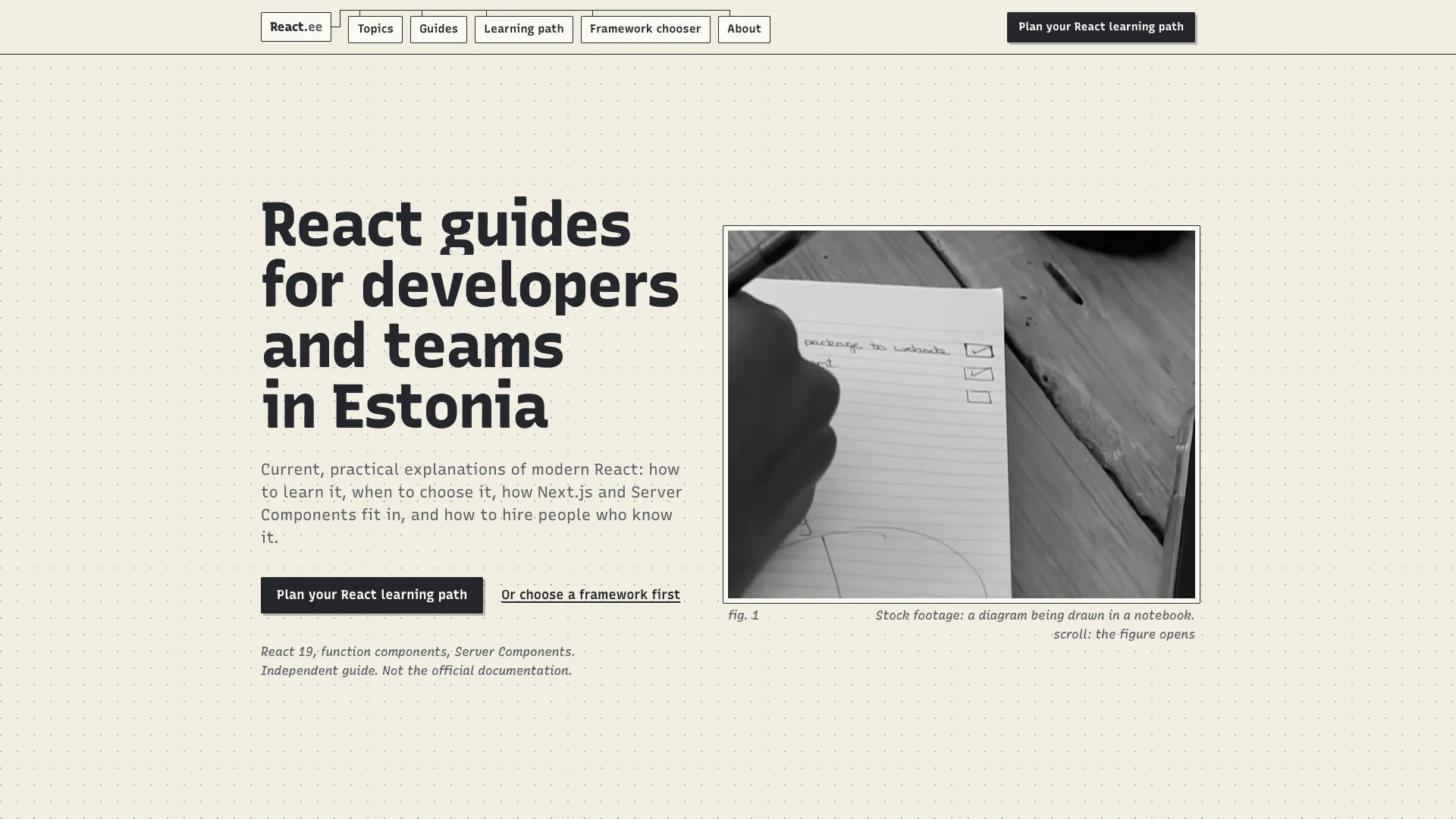
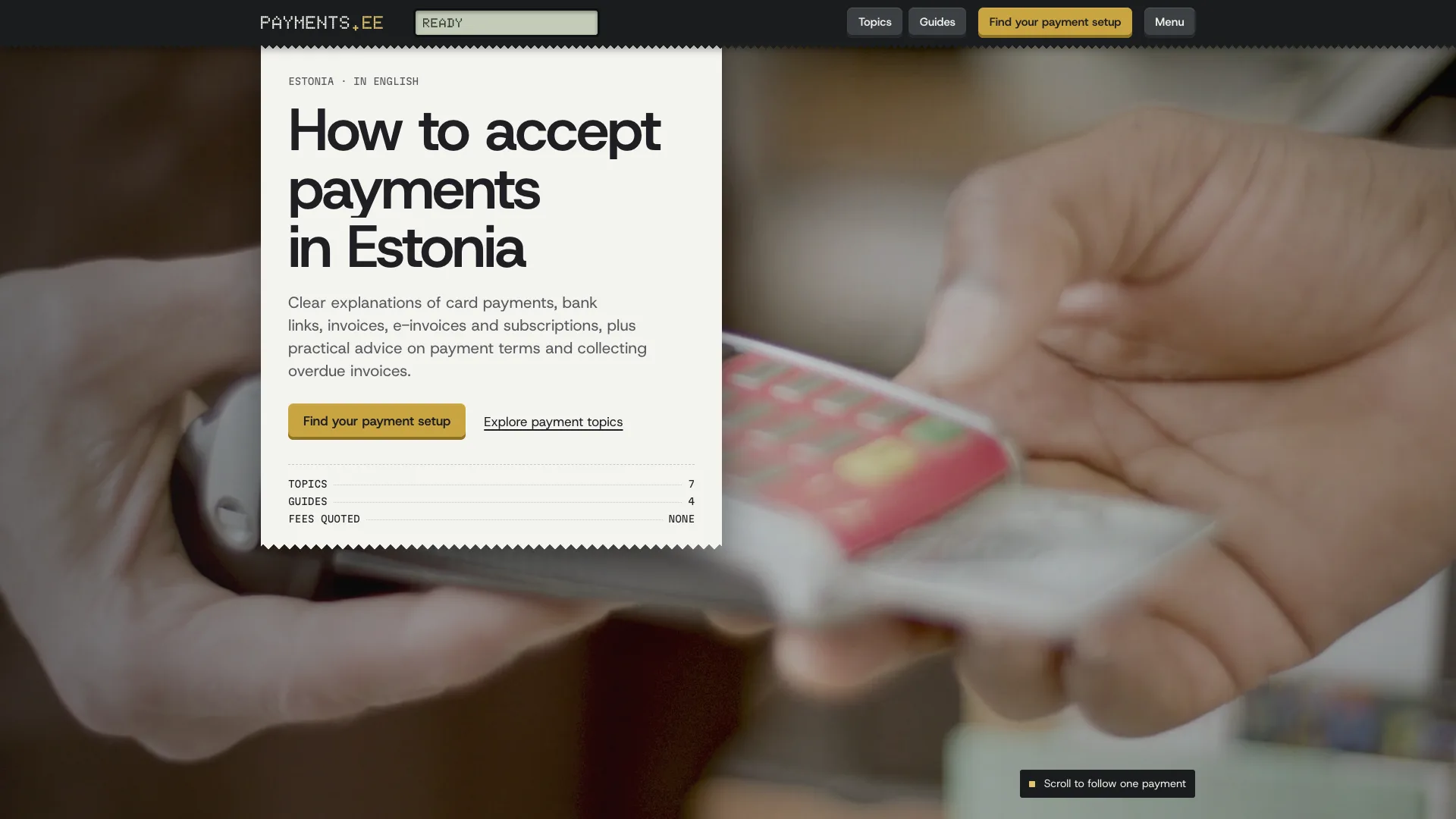
Case study ·
Success.ee — A Plain-English Guide to Starting a Company in Estonia
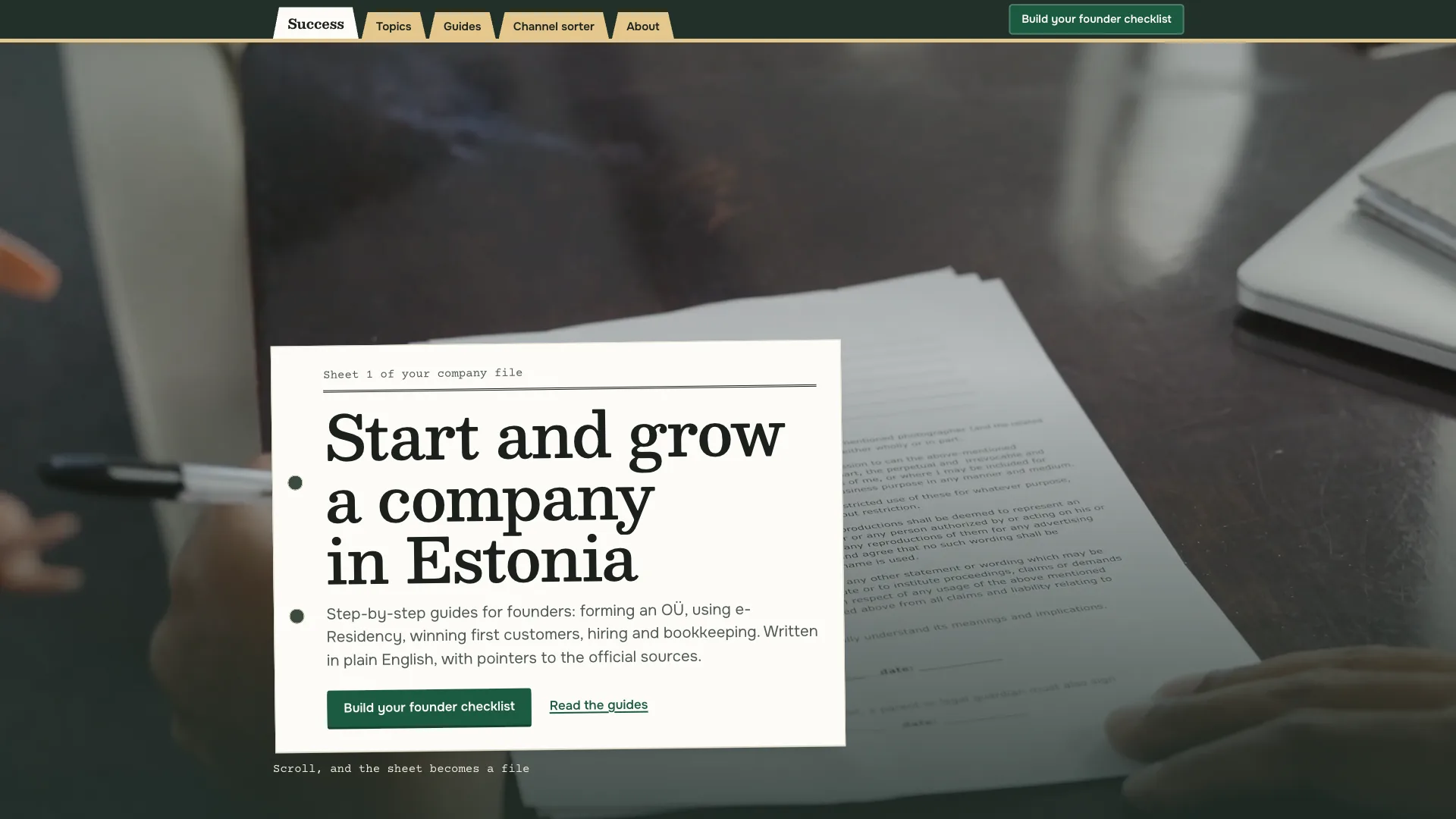
Success.ee is an English-language guide to starting and growing a company in Estonia. It explains how an OÜ is registered, what e-Residency does and does not give you, how to find the first customers, what changes when you hire and how to keep the books. Its homepage is built as a company file: one sheet of paper that, as you scroll, becomes a company. We designed and built the site end to end, and still run it. It went live on 13 November 2026.
The opportunity
The registration itself is quick when every founder can sign digitally. What takes the time is everything around it: a legal address, a contact person when the board sits abroad, a business bank account, a first customer, the first employee, an annual report that is due even in a year with no activity.
The people asking are local founders, expats and foreign entrepreneurs, many of whom read English first. They need answers in plain language, and they need them to stay true. Fees, tax rates and thresholds change, so a guide that prints a number it cannot stand behind does its readers no favours.
The brief was a guide that answers first and sells nothing: direct answers, honest limits, and a pointer to the official source wherever a figure matters.
What we built
A company file that builds itself
The homepage opens on a single sheet, "Sheet 1 of your company file". Scroll, and the sheet becomes a file with five tabs: Registered, Bank, Books, First invoice and First hire, with a counter that ticks up to "5 tabs in the file". Each tab carries one short idea. The application is one sheet. The money needs somewhere to land. Records start with the first transaction. A customer makes it a business. The company becomes an employer.
The sheet, the stamp, the folder and the drawer are all drawn in code, and the paper textures and labels are generated in the browser. The site's credits page says plainly that no registry form, seal or logo is reproduced, so the metaphor never pretends to be an official document. A short stamp intro opens the page, and the smooth scrolling is handled by Lenis.
Seven topics, thumbed through like a drawer
Below the story, the seven topics sit as folders in a drawer: company formation, e-Residency, banking and payments, first customers, hiring your first employee, bookkeeping and reporting, and a company taxes overview. They are grouped by where a company is, Starting, Growing or Running, and each folder shows three points to remember. A reader can drag across the tabs or use a slider.
Four guides that answer first
Four longer guides cover the questions that come up most: what it costs to start a company in Estonia, how to register an OÜ step by step, what e-Residency does and does not give you, and how to choose a sales channel for the first customers. Each opens with a short direct answer, shows a reading time of four or five minutes and carries the date it was last updated. The text names the Estonian authority that publishes the current figure rather than quoting a number that will age.
Two tools that stay in the browser
The founder checklist asks four questions: where you live, whether you start alone, what the company will sell and whether you will hire soon. It turns a general 13-step list into the steps in order for that situation, each linking to the guide that explains it and the official source to confirm the details with. The channel sorter takes three answers and sorts six sales channels into one to start with, one for the background and the rest for later. Both run entirely in the browser. What a visitor enters is kept in that browser, so the list is still ticked on return, and nothing is sent anywhere.
Built for search and AI assistants
Every answer sits in plain, readable HTML. The homepage carries a six-question FAQ with matching FAQPage structured data, alongside Organization and WebSite markup. There is an RSS feed, an llms.txt that summarises the site and lists every topic and guide, and a sitemap. The footer states the limits of the content: general information, not legal or tax advice. Stock footage and photographs are credited to their makers on a dedicated credits page, and the typefaces, Besley, Onest and Courier Prime, are open-licence fonts served through Google Fonts.
The result
Success.ee went live on 13 November 2026 with seven topics, four guides, two tools, an RSS feed and an llms.txt, ready to be found by people searching in English and by the assistants they ask instead. It is too new for results, and we do not claim any. What it does give a founder is a calmer first week: the order of the work, the honest limits of what a guide can say, and a clear route to the official source for everything that changes.