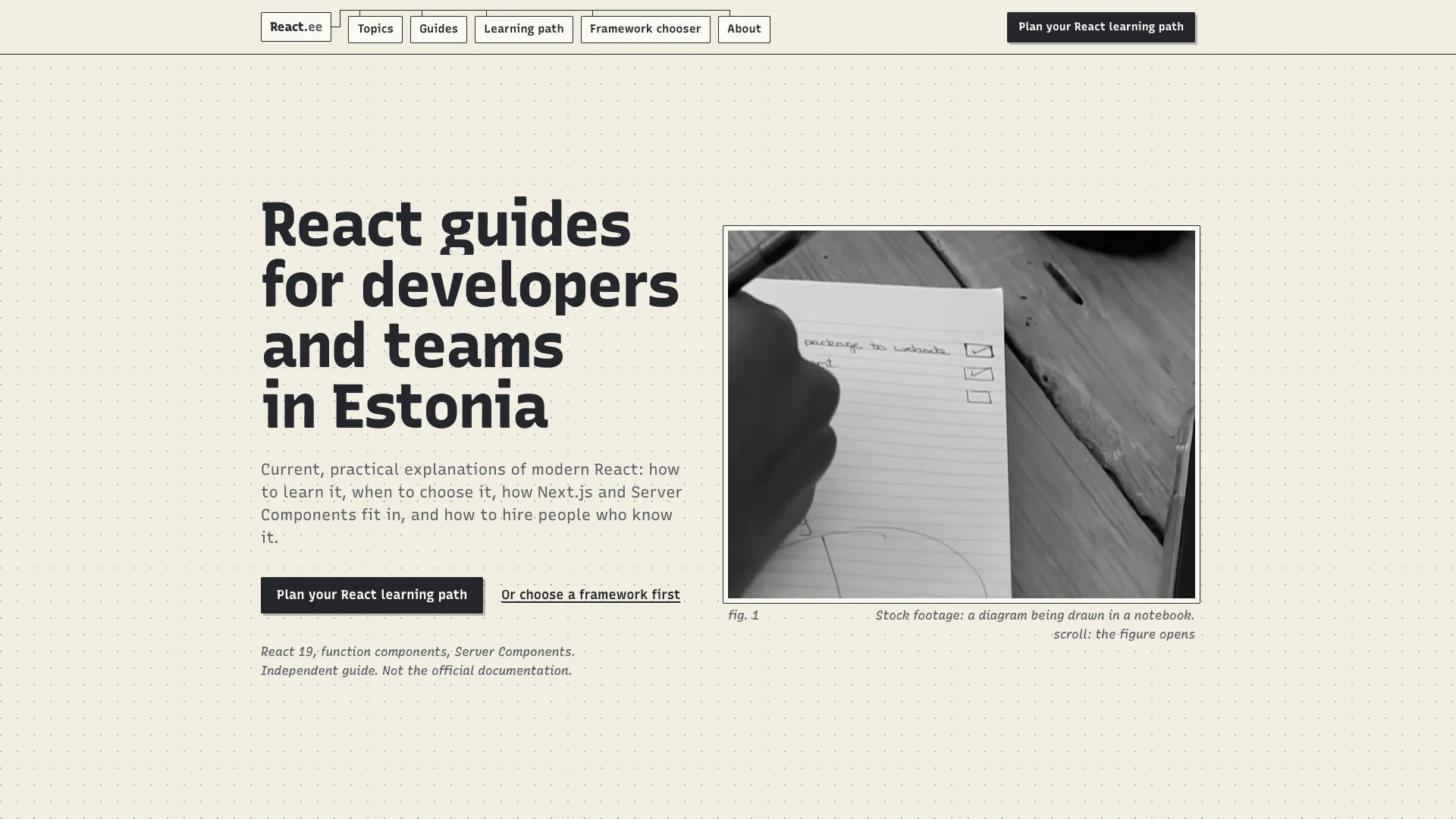
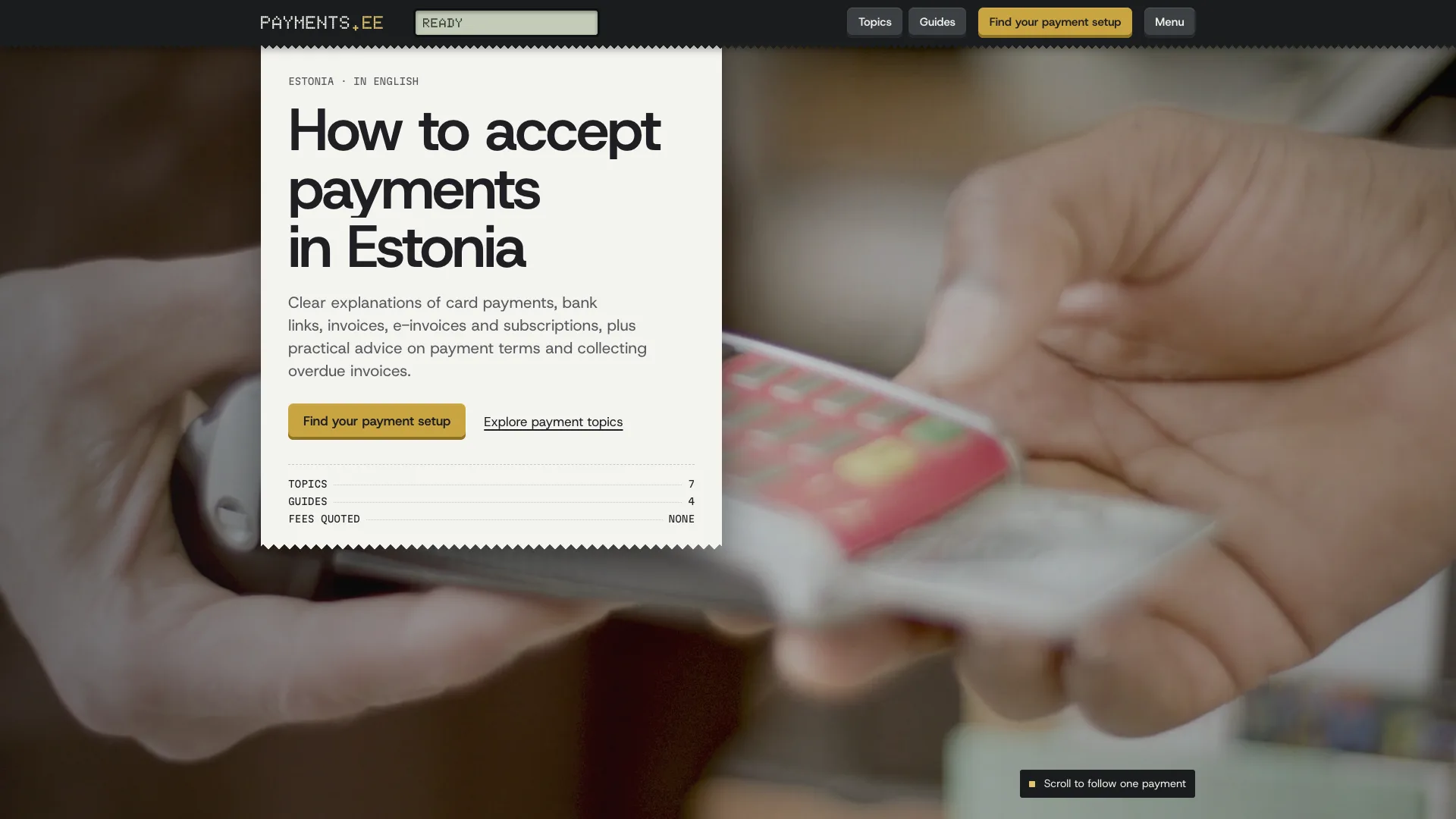
Case study ·
Cart.ee — An Online Store Guide Told Through One Parcel
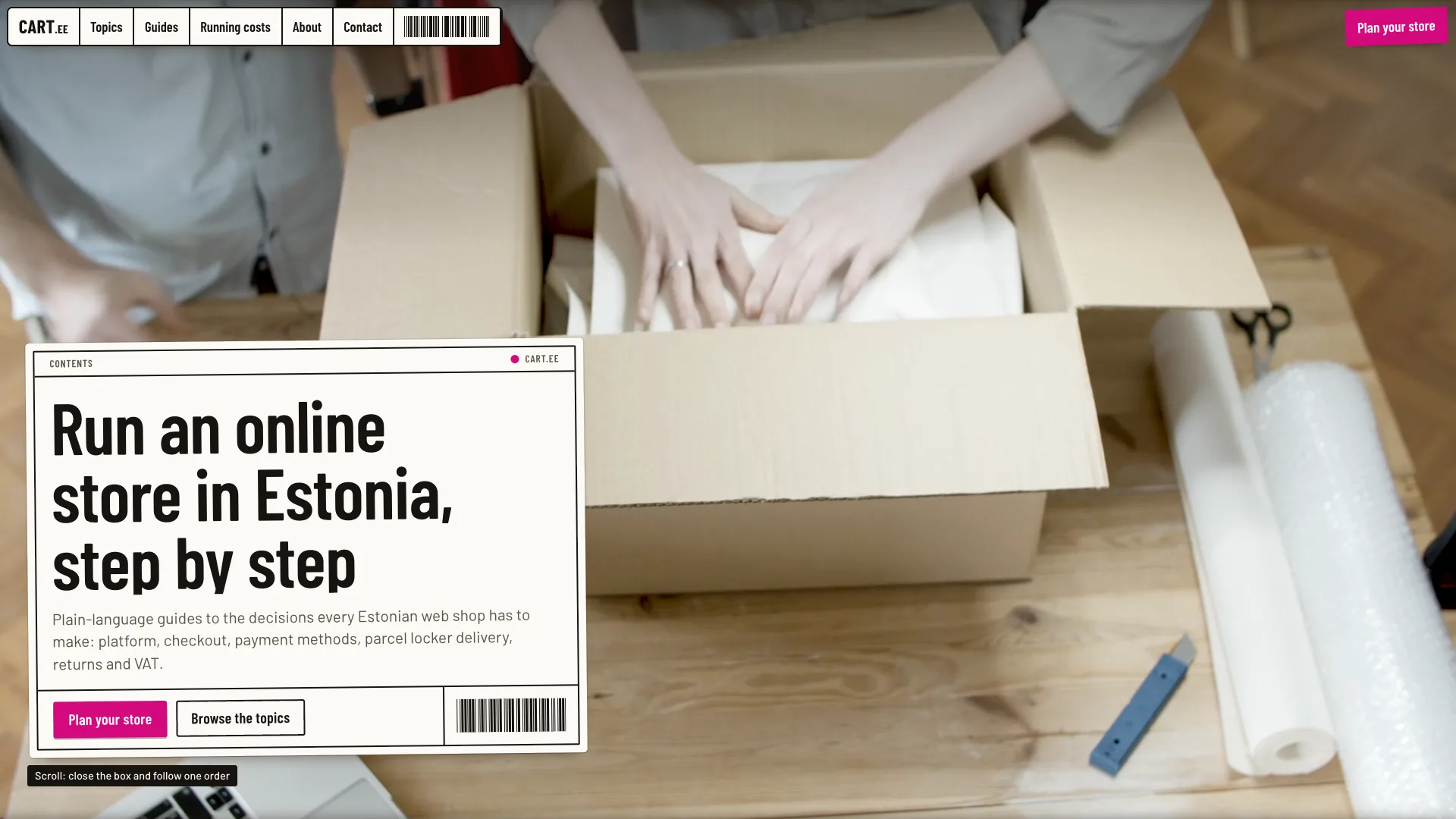
Cart.ee is an English-language guide to running an online store in Estonia. It covers the choices a small or mid-sized seller has to make: which store platform to use, how to build a checkout that Estonian shoppers finish, which payment methods to offer, how parcel locker delivery works, how to handle returns, and what to know about VAT in general terms. We designed and built the site end to end, from the story on the homepage to the guides, the tools and the search and AI-assistant plumbing underneath, and we still run it.
The opportunity
Opening a web shop in Estonia is easy to start and easy to get wrong. The shoppers have habits of their own: they expect to pay through their bank at checkout, and they expect their parcel to wait in a locker near home. Generic e-commerce advice is written for other markets and tends to skip both. Advice written locally is mostly in Estonian, which leaves expats and foreign sellers entering the market with very little to read.
Rules and prices also move. A guide that quotes a fee or a tax threshold is wrong the day it changes, and a reader who trusts it pays for the mistake. The brief was a guide that is useful to someone who has never sold anything online, in English, and honest about what it does not know.
What we built
One parcel, followed from the bench to the locker
The homepage is a scroll story with a single metaphor: close the box and follow one order. Every page of the site is styled as a packing slip, with a barcode and a "Contents" list, and the opening scene is a box on a desk that is packed and sealed as the reader scrolls. Then the parcel moves through five stages: Packed, Labelled, In transit, In the locker, Collected. Each stage is a decision the store makes once, before the first order: who packs it and from what stock, where the label comes from, which carriers at which size class, which locker the buyer picked at checkout, and how it comes back. Each links to the topic that covers it. The illustration says plainly that it is not to scale and shows no carrier's equipment.
A locker door you can drag
Below the story, a small interactive lets the reader drag the corner of a parcel against example locker doors. Doors share a width and differ in height, so trimming the box a little can drop it into a smaller, cheaper class. It is labelled as example proportions only, because each carrier publishes its own sizes and prices.
Seven topics and four guides
The seven topics are choosing a store platform, checkout design, payment methods, parcel locker shipping, inventory and order management, returns and refunds, and VAT basics. The four guides go longer: what it costs to run an online store in Estonia, how to choose a platform, how to manage orders, inventory and invoices, and how parcel locker delivery works for sellers. Each guide opens with the direct answer, shows its reading time and carries the date it was last updated. The homepage also lays out a six-step daily routine, from confirming payment to marking the order shipped.
Two tools that stay in the browser
The store planner asks four questions and returns a starting setup: platform type, checkout, payments, delivery, returns, stock and VAT, each with its reasoning and a link to the page that covers it. It recommends kinds of platform rather than brands and quotes no fees or tax figures. The running-cost sheet works out what one delivered order costs. It is deliberately empty, because the numbers belong to the seller's own contracts. Both tools say that nothing is stored or sent: what you type stays in your browser.
Written to be found and quoted
The site carries FAQPage structured data, an RSS feed, and an llms.txt with a full-text companion file, so search engines and AI assistants can read the guides cleanly. The footer and every tool say that the content is general information, not legal or tax advice, and that figures should be checked with the official source each guide names. Stock footage and photographs come from Pexels and are credited on their own page, which also notes that the homepage order journey is drawn in code and uses no carrier artwork.
The result
Cart.ee went live on 13 November 2026, built in a week. It is a small, focused site with seven topics, four guides and two tools, and one clear idea: an online store is a series of decisions, and each one can be explained in plain words.