Case study ·
Hungry.ee — Estonian Food Explained, Season by Season
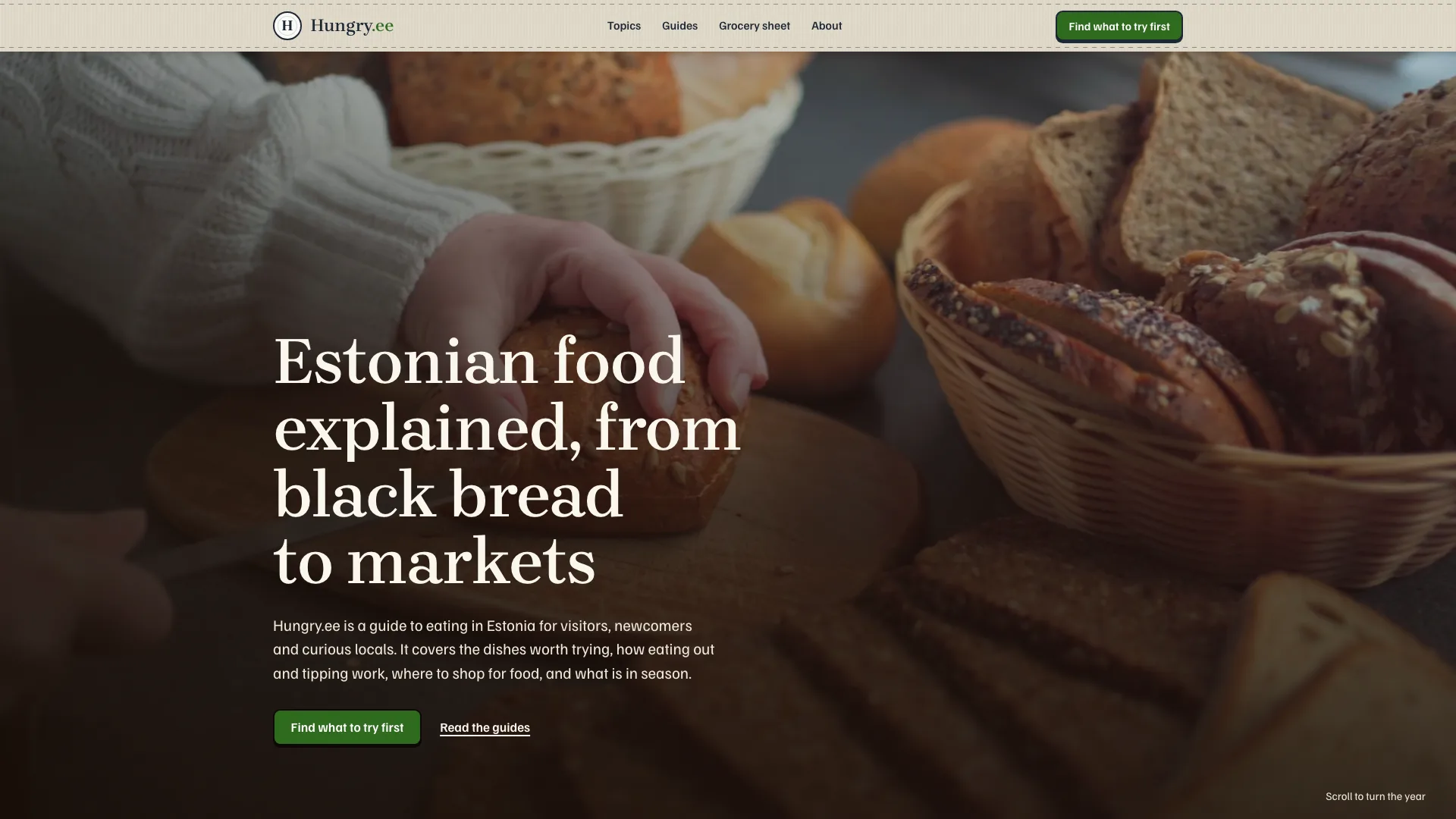
Hungry.ee is an English-language guide to eating in Estonia. It covers the dishes worth trying, how eating out and tipping work, where to shop for food and what is in season. It is written for visitors, newcomers and curious locals. We designed and built the site end to end, and we still run it.
The opportunity
A menu in Estonian is a guessing game for anyone who does not read it. Packaging in the shops is rarely in English, cartons of milk, kefir and buttermilk look alike, and the practical rules, from tipping to lunch offers and bottle deposits, are rarely written down for outsiders. What exists online tends to be restaurant rankings and sponsored reviews, which tell you where to go but not what you are looking at.
The brief was a guide that explains the food rather than recommending places: real dishes, everyday practicalities, no invented recommendations.
What we built
One table, four seasons
The homepage is a scroll story that turns the year. One table in Estonia changes from spring to winter: rhubarb and sorrel, new potatoes with butter and dill, mushrooms and lingonberries, and the Christmas plate of blood sausage and sauerkraut. Each season says why it is in season. Dark rye bread stays on the table all year. The table is drawn in the browser, and the photographs and footage are stock material, credited on their own page.
A day of eating, in order
Five moments, from the first glass of kefir to the bread that ends the day, each leading to the topic that explains it: dairy, the market, the daily lunch special, coffee and something baked, and fish with rye bread.
Read the word, not the colour
Shop labels are in Estonian, so the homepage lets the reader drag a card along a shelf to turn the labels into English: piim is milk, pett is buttermilk, kohupiim is curd cheese, parim enne is best before. More label words sit in the grocery topic.
Eight topics, four guides
The eight topics cover Estonian dishes to try, black bread, kama and dairy, fish, sprats and smoked food, eating out and tipping, food delivery, grocery shopping, markets and seasonal food. The four guides cover what food costs in Estonia, what Estonian food is, where to buy food (supermarkets, markets or delivery) and how a small restaurant or café can manage table bookings. Each opens with the direct answer and carries the date it was last updated.
Two tools that stay in the browser
The dish picker asks three questions, how adventurous you are, what you skip and the season, and suggests five dishes described on the site. The weekly grocery sheet lets a household write down what it buys and what each item costs where it shops, then adds it up per week, per month and per person. No prices are filled in, because the reader's own are the only ones that count. Both keep their data in the browser and send nothing.
Independent, and honest about it
Hungry.ee says on every page that it is an independent editorial guide: not a restaurant, a shop or a delivery service, and it does not rank or review places to eat. Links to services from the same network are always labelled as such. For search and AI assistants, it has an RSS feed and an llms.txt with a full-text companion.
The result
Hungry.ee went live in November 2026, built in a week. It has eight topics, four guides and two tools, and it explains Estonian food by showing it: the seasons on one table, and the labels in the shop turned into English.